
NATURAL LACQUER / DAQI

Natural Lacquer, Made Slowly

A craftsman’s note on Qiwen, Kai Se, and the mellow luster that comes with time

People often ask me why a natural-lacquer frame looks richer after it has been worn for a while. In the workshop, we have a simple way to describe it: the lacquer has begun to open.


We call this Kai Se — “opening color.” The surface becomes less tight, the colors become easier to read, and the luster grows softer. It is not the hard shine of a fresh synthetic coating. It is closer to the quiet, mellow look of old jade.


“A lacquer piece leaves the workshop finished, but time has not finished with it.”

NATURAL LACQUER / DAQI

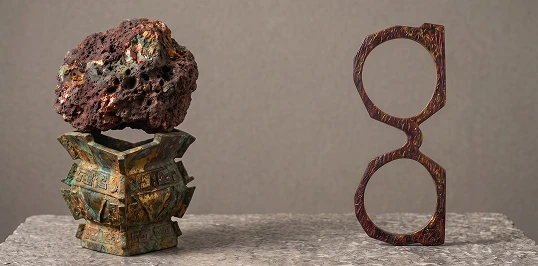
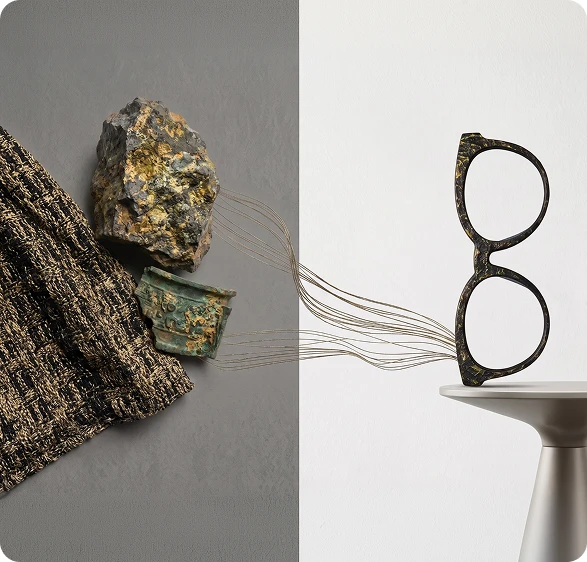
Natural materials, old surface language, and a finished textured-lacquer eyewear front.

Daqi is built, not sprayed

Natural lacquer, or Daqi , comes from the sap of the lacquer tree. The material itself is traditional, but the way we use it on eyewear still follows the same old rule: one layer at a time.


A coat of lacquer is very thin. We apply it, let it cure in the proper environment, then return to the bench and continue. For our eyewear, the full build can involve more than 50 applications. A complete piece usually takes around two to three months from the first coat to the final polish. This is why I never describe lacquer as a fast finish. You cannot hurry it. The weather, humidity, the condition of the surface — all of these decide the rhythm.

Daqi is built, not sprayed

50+ lacquer applications  •  about 2–3 months  •  hand sanded and polished

Daqi is built, not sprayed

Qiwen begins with layers. Color and texture are built into the lacquer before they are revealed by hand.

Qiwen: the pattern lives inside the lacquer

Qiwen: the pattern lives inside the lacquer

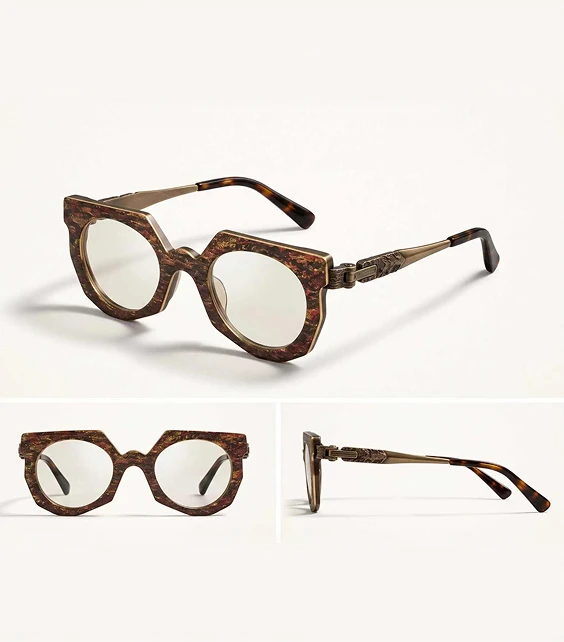
Red-brown Qiwen. The pattern is not printed on the surface; it is brought out from the layers below.

Customers sometimes ask whether these patterns are printed. They are not. In Qiwen (起纹), we build different colors, thicknesses and raised areas into the lacquer. Some are left visible. Some are deliberately covered.


Only later do we begin to sand the surface back. Little by little, the buried colors appear again. That is why the pattern has depth: it is not sitting on top of the frame — it is inside the lacquer.


The craftsman can guide the balance of the pattern, but he cannot make every line identical. That small amount of uncertainty is part of the craft. Ten frames can be made in the same color family, and each one will still have its own face.


“The hand does not draw the pattern at the end. It finds the pattern that was already built into the lacquer.”


Why does it become more mellow with wear?

This is the part I explain most often. Natural lacquer does not simply become shinier because it has touched the skin.


First, the color continues to mature visually. A newly finished piece can look deep and slightly restrained. With time, the red, brown, gold and black become easier to see. In our trade, this is Kai Se — the color “opening.” Second, a pair of glasses is handled every day. Fingers, skin and a soft cleaning cloth touch the surface again and again. That ordinary contact acts like an extremely light continuation of polishing. The surface becomes calmer, and the light reflected from it becomes softer.


That is the difference between bright and mellow. Brightness sits on the surface. A good lacquer luster seems to have depth.


We do not tell customers to oil it, wax it, or “force” a patina. Wear it normally. Wipe it gently. Let time do the rest.

Why does it become more mellow with wear?

Black-gold lacquer eyewear. With normal wear, the surface becomes softer and more personal rather than simply brighter.

On horn, the lacquer also has a job to do

We did not begin applying natural lacquer to horn only for decoration. Horn is beautiful, but it is a natural material and it responds to sweat, moisture and changes in the environment.


A properly built lacquer surface gives the horn an additional protective layer. In our own workshop process, it improves resistance to daily moisture and perspiration, helps stabilize the surface, and reduces the risk of cracking or peeling during use.


For me, this is important. Traditional craft should not survive only as a visual style. When we use it on a modern object such as eyewear, it should still do real work.

The piece is finished by the craftsman — and completed by time

Among older craftsmen, you sometimes hear the phrase that natural lacquer is “alive.” I do not take that literally. It is simply our way of saying that the surface has a long life.


A new frame shows the work of the craftsman: the layers, the texture, the sanding, the polish. Years later, it also carries the habits of the person who wore it. The places touched most often may mellow sooner. The colors may become easier to read. Two frames that looked similar when new can grow apart with time.


“The color is not fading. It is opening.

The surface is not becoming flashy. It is becoming mellow.”


That is the kind of beauty we look for in Daqi: not a surface that stays frozen on the first day, but one that becomes more settled, more personal, and more complete through use.