Enamel on Eyewear

What the Craft Really Demands

A workshop perspective on hand-applied enamel, layered firing, surface control, and durability in decorative frames.

From a distance, the two may look similar. Up close, they are not. A painted surface sits on the metal. Enamel work becomes part of the visual structure of the piece. The color has depth, the surface catches light differently, and small variations remain visible from one frame to another.


That is exactly why enamel has long belonged more naturally to jewelry making than to ordinary eyewear production.Bringing that kind of workmanship onto a pair of glasses is not simply a matter of choosing a blue color and filling a groove.


The difficulty is in controlling the material, the amount applied, the boundaries of the pattern, and the relationship between one layer and the next.

Enamel on Eyewear

Figure 1. Enamel used as part of the frame architecture rather than as a simple surface color. The blue enamel around the rims and the decorative metalwork at the temples give the frame a distinctly jewelry-like character.

Enamel Is Most Effective When the Metalwork Is Designed for It

On eyewear, enamel is usually most convincing when it is treated as part of the design from the beginning.


The temple is a natural place to use it. There is enough surface area to create a decorative field, while the surrounding metal can act as a border and protect the enamel visually and mechanically. Depending on the frame construction, the same approach can also be used around the brow or other decorative metal sections.


This matters because enamel needs boundaries. If the metal structure is poorly considered, the color looks added afterward. When the recesses, edges and ornamental details are designed together, the enamel and the metal begin to read as one piece.


That is what gives a well-made enamel frame its jewelry character. It should not look like a metal frame that has been painted blue. It should look as though the blue belongs there.


Enamel Is Most Effective When the Metalwork Is Designed for It

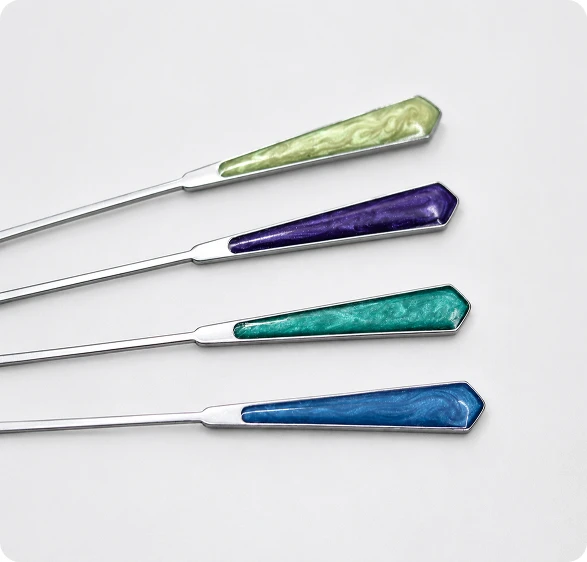
Figure 2. Different enamel colors applied within defined metal fields. Even on simple components, the character of the finish comes from the combination of metal boundaries, enamel depth and the way light moves across the surface.

The Hand Application Is Where the Character Begins

The Hand Application Is Where the Character Begins

The enamel used in this type of work is applied by hand. That point is more important than it may sound.


A machine is very good at repeating a quantity. A skilled hand is good at reading a surface.


When applying enamel, the worker is constantly judging where the material is sitting, whether one area is heavier than another, whether the edge remains clean, and whether the next application will disturb what is already in place. Too little material and the surface can appear weak or unfinished. Too much, and fine design details start to disappear.


The operator therefore works in small areas, gradually building the finish rather than trying to create the final appearance in one pass. This is one reason two handmade enamel components are rarely absolutely identical. The overall standard can be controlled, but the small movement inside the enamel remains individual. For this kind of product, that is not a defect. It is part of the craft.

Good Enamel Is Built in Layers


One of the common mistakes in understanding enamel work is to think only about the final color. An experienced worker thinks about layers. The finish is developed through repeated application and controlled firing rather than by placing all of the material at once. Each stage affects the one that follows. That is particularly important when the design calls for a gradient.


A deep ocean blue, for example, should not suddenly stop and become black. The transition has to feel natural. The darker area needs enough depth to hold its character, while the neighboring blue still needs to remain visible. The result depends on controlling the relationship between successive layers and firing stages.


When this is done properly, the eye does not immediately notice where one tone ends and another begins. It simply sees depth. That is usually the sign that the craftsman has done his job properly.


The Surface Should Have Movement


A completely flat industrial color is easy to recognize. Enamel behaves differently.


One of its most attractive qualities on eyewear is the way the surface changes under light. Depending on the angle, an area may appear darker, brighter, deeper or more transparent. For certain designs, we deliberately use this characteristic to suggest the movement of water.


The effect does not come from printing a water pattern onto the frame. It comes from the enamel itself: its surface, its depth, its tonal variation and the way light travels across it.


When somebody turns the frame in the hand, the appearance should continue to change. A photograph can show the color, but it cannot completely reproduce that movement. This is why enamel often looks better in the hand than it does on a flat computer screen.


Clean Borders Are Harder Than Large Areas


People often look first at the center of an enamel section. A craftsman usually looks at the edges.


The border between enamel and metal tells you a great deal about the quality of the work. It should look intentional. The color should stay within the designed field, and the surrounding metal detail should remain readable.


This becomes much more difficult on an ornate eyewear temple because the enamel may sit beside engraving, relief work, stones or other decorative features. There is very little room for careless work.

Previous:

Natural Lacquer

Next:

DW1334